


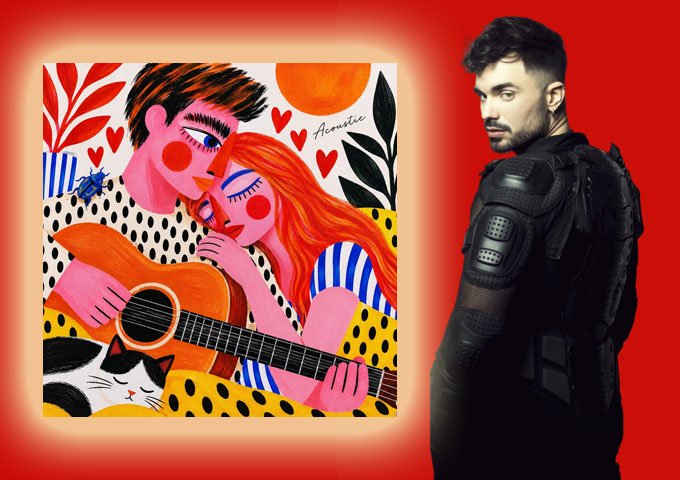
Drawing on the infectious qualities of classic electronic pop, Fran Squadrito delivers a vibrant musical statement with “Private Life.” The single combines jangling guitar textures, punchy percussion, warm bass and expressive synths to create a polished, dance-friendly sound. Beneath its rhythmic appeal, the lyrics examine celebrity surveillance, emotional disconnection and the desire for a more authentic existence. The recurring chorus provides an immediately recognizable focal point, reinforcing the song’s central theme of personal independence. It is an accessible yet reflective release that balances melodic enjoyment with meaningful observations about modern life.
The fascination with celebrity has always carried an uncomfortable contradiction. Audiences celebrate the visibility, glamour and apparent privileges of public figures, yet rarely consider what happens when attention becomes intrusive and the distinction between professional identity and private existence begins to disappear. Fran Squadrito explores this tension in “Private Life,” an electronic pop release that looks beyond the superficial attractions of fame to examine its psychological consequences. At its heart is a simple but increasingly relevant proposition: being visible does not mean surrendering the right to be left alone.
Musically, “Private Life” approaches its subject with an energetic, accessible sound that deliberately contrasts with the more complicated emotions beneath its surface. A thumping mid-tempo rhythm provides the foundation, while jangling, strummed guitars introduce a lively melodic character that gives the arrangement an organic edge. The resonating bassline supplies warmth and momentum, locking into the beat as punctuating synths add brightness, atmosphere and a distinctly electronic personality. These elements create an appealing meeting point between classic synth-pop, funky nu-disco and contemporary pop production, giving the single a rhythmic confidence that makes it immediately approachable.
There is an interesting relationship between this upbeat musical framework and the lyrical subject matter. Rather than presenting the pressures of public scrutiny through an entirely sombre arrangement, Fran Squadrito places the listener inside a soundscape that possesses movement, color and an almost celebratory exterior. That contrast reflects the central contradiction of the song itself: outward appearances can suggest freedom, excitement and success while concealing a more complicated emotional reality. The production gives the track its immediate appeal, but the subject matter provides its deeper substance.

The opening lyrics establish the intrusive nature of celebrity culture through images of paparazzi who seem incapable of respecting personal boundaries. References to stalking and photographers hiding in unexpected places, even inside a gym, portray surveillance as something that follows an individual into spaces that should offer ordinary privacy. The deliberately provocative comparison used to describe their behavior communicates the intensity of this intrusion, suggesting that the pursuit of a photograph has become an obsession in which personal dignity is easily disregarded.
The subsequent references to traveling by car or boarding a plane reinforce the idea that geographical distance offers little protection. Wherever the subject goes, the attention follows. Airports, vehicles and everyday destinations become extensions of the same public arena, leaving little room for an individual to exist without being watched.
Interestingly, the narrative then shifts toward a more personal perspective. The lyrics move away from the spectacle surrounding public figures and introduce someone who is seemingly able to retreat from that attention, describing a preference for remaining hidden among the trees. This contrast creates an intriguing ambiguity about the narrator’s relationship with fame and privacy. Is this an observation of another person’s experience, a reflection of the narrator’s own circumstances, or an attempt to understand the psychological distance between public exposure and personal freedom? The uncertainty adds another dimension to the song, particularly when the lyrics question whether what is being experienced belongs to fiction or reality.
That question suggests how constant exposure can blur the distinction between an individual’s authentic identity and the image others have constructed around them. The admission that these circumstances might have an emotional effect, combined with the frustration of finding change so difficult, introduces vulnerability without becoming excessively dramatic. The lyrics acknowledge that the consequences of scrutiny can be difficult to escape, even when the desire for independence is clear.
The recurring chorus, built around the declaration of leading a private life, provides the song with its central statement. Its repetition gives the phrase an almost defiant quality, as though the narrator is establishing a boundary that requires neither public approval nor explanation. Against the more descriptive verses, the chorus distills the entire argument into a direct assertion of independence. Its simplicity also makes the message immediately memorable.
The second verse introduces another revealing layer. The acknowledgment that certain days are simply difficult challenges the assumption that a seemingly privileged existence must automatically be a happy one. Having the apparent freedom to do whatever one pleases does not necessarily translate into emotional fulfillment, particularly when circumstances can suddenly become overwhelming. The suggestion that life can come undone introduces the possibility that external success and internal stability do not always coexist.
Perhaps the most intimate passage arrives when the narrator proposes changing things for one evening and keeping an experience entirely to themselves. Here, “Private Life” moves beyond its commentary on celebrity culture to explore the value of sharing a moment without inviting the outside world into it. The desire to preserve something meaningful between two people suggests that privacy is not synonymous with isolation. Instead, it allows genuine closeness to develop without interference or performance. The repeated acknowledgment that certain circumstances have a personal emotional impact makes the narrator’s perspective particularly human, revealing someone who understands the difficulty of maintaining boundaries but remains unwilling to sacrifice everything that makes life meaningful.
The final return to the opening imagery reinforces the persistence of the problem, leaving the listener with the impression that the struggle is ongoing rather than easily resolved.
For Fran Squadrito, the subject also connects naturally with a lifelong appreciation for electronic pop music. Born in Messina, Italy, and raised in the Milan metropolitan area, he developed an interest in singing at a young age. His musical fascination began in the early 1980s, when he was just six years old and discovered the sounds of Italodisco and Eurodisco. Those early influences became a lasting passion, subsequently informing his involvement in regional and national music events, live performances and media appearances. The melodic sensibilities and electronic foundations evident in “Private Life” reflect that enduring relationship with the music that first inspired him.
Ultimately, “Private Life” succeeds by combining an infectious pop arrangement with a subject that extends well beyond celebrity culture. Its observations about paparazzi and public scrutiny provide the narrative starting point, but its underlying message speaks to anyone who has experienced the pressure to remain visible or accountable to the expectations of others. In a culture that increasingly encourages personal exposure, the ability to decide what remains private becomes an important expression of independence.
With its lively electronic instrumentation, memorable chorus and thoughtful exploration of personal boundaries, Fran Squadrito’s “Private Life” offers more than an appealing pop soundtrack. It reminds us that freedom is not measured by how much of ourselves the world gets to see, but by the ability to decide what we choose to share.











Leave a Reply